Blender 4.0 Tutorial
Learn 3D Modeling, Animation, Lighting and Video Editing
ℹ️ Software Info
📊 Level: Beginner to Advanced
🏷️ Tags: Blender, 3D Modeling, Animation, Lighting, Video Editing
💰 Price: Free (Open Source)
🔗 Source: blender.org — Official Website
🖥️ OS: Windows, macOS, Linux
📦 Version: Blender 4.0+
📝 Description
Blender 4.0 is the world's most powerful free and open-source 3D content creation suite. It provides a comprehensive set of tools for modeling, animation, lighting, material creation, rendering, and video editing — making it a real competitor to paid software like Maya, 3ds Max, and Cinema 4D.
Version 4.0 brings radical updates to the EEVEE Next render engine, better hardware support, an improved user interface, and new modeling tools — raising the bar significantly compared to previous versions.
✨ Key Features
- Completely free and open source — no subscriptions or restrictions
- EEVEE Next render engine with ray-traced lighting and realistic paths
- Cycles engine for photorealistic path-traced rendering
- Advanced modeling tools: editing, sculpting, retopology
- Powerful animation system with armatures and morph targets
- Physics simulation engine: fluids, smoke, hair, cloth
- Built-in video sequence editor
- Node-based compositor for visual effects
- Flexible and powerful node-based material system (Shader Nodes)
- Python add-on support and full API
- SVG support and CAD/studio file import
- Continuous updates with a massive active community
🆕 What's New in Blender 4.0
- EEVEE Next — new render engine with realistic reflections and soft shadows
- Major Viewport performance and preview speed improvements
- Enhanced lighting system with advanced Shadow Maps support
- New modeling tools: improved Mesh Boolean, Slice Fill
- Updated UI with better icons and menus
- Geometry Nodes improvements with new node types
- Better support for modern GPUs (GPU Rendering)
- Improved Materials system with Specular and Sheen additions
🖱️ User Interface
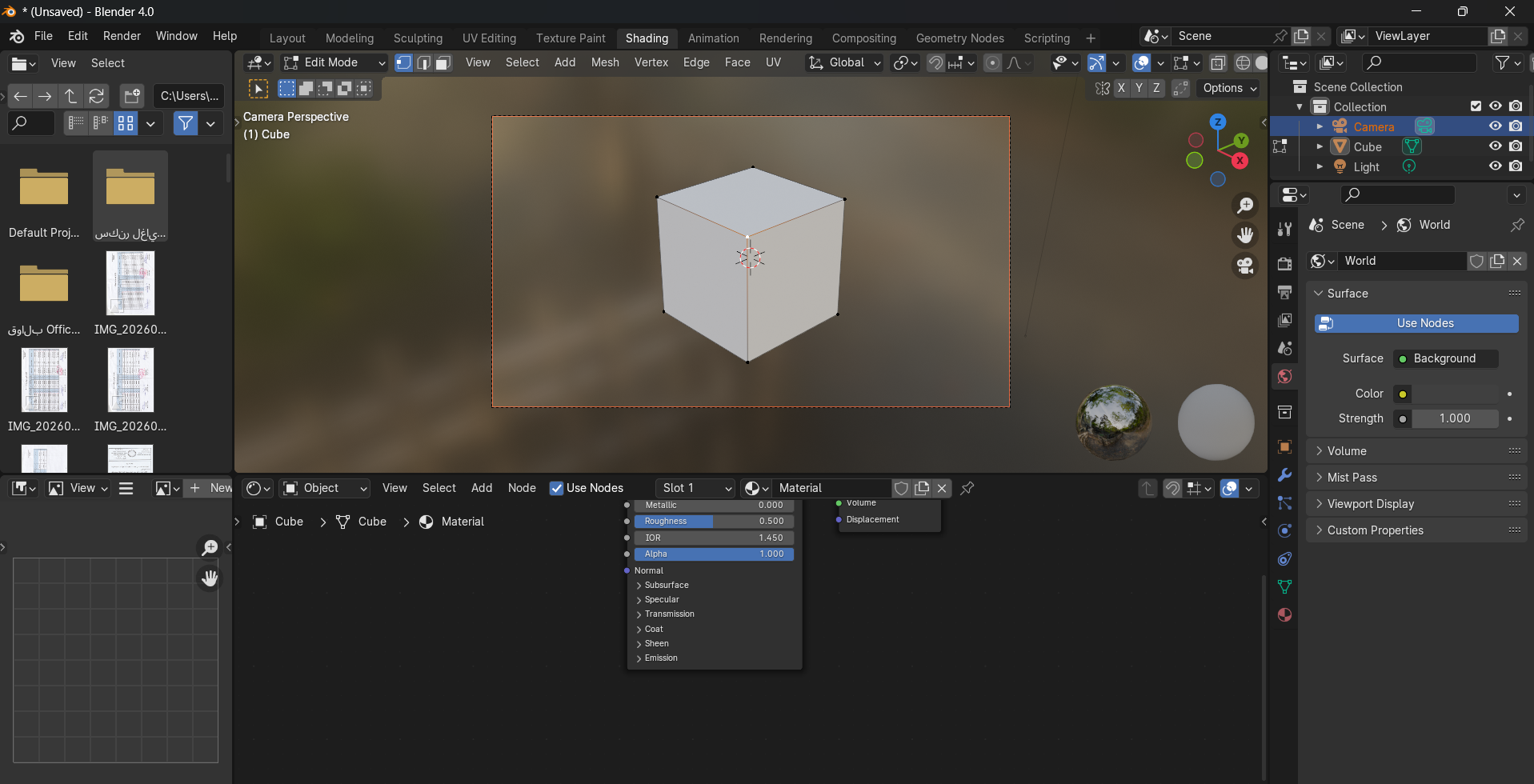
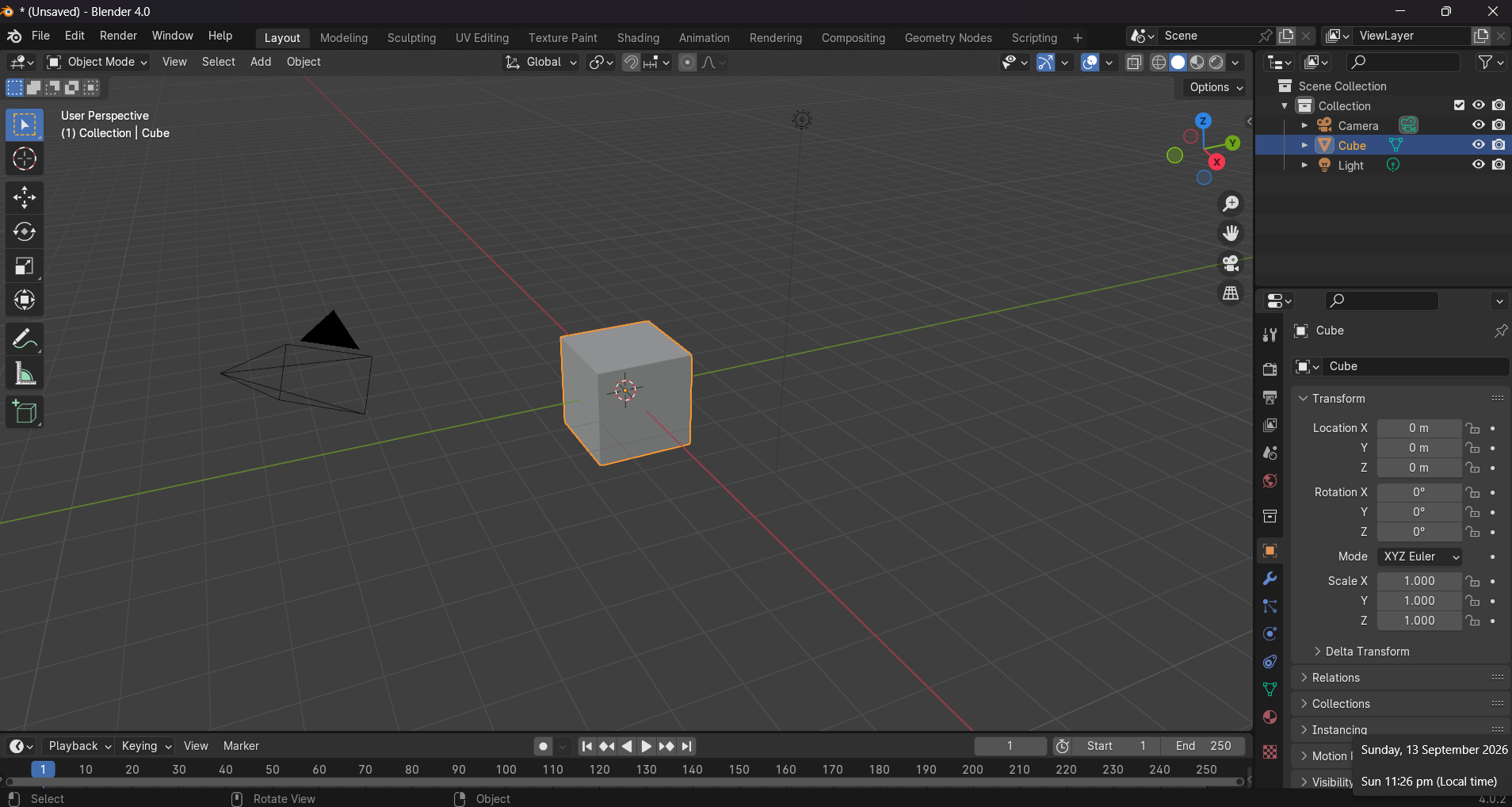
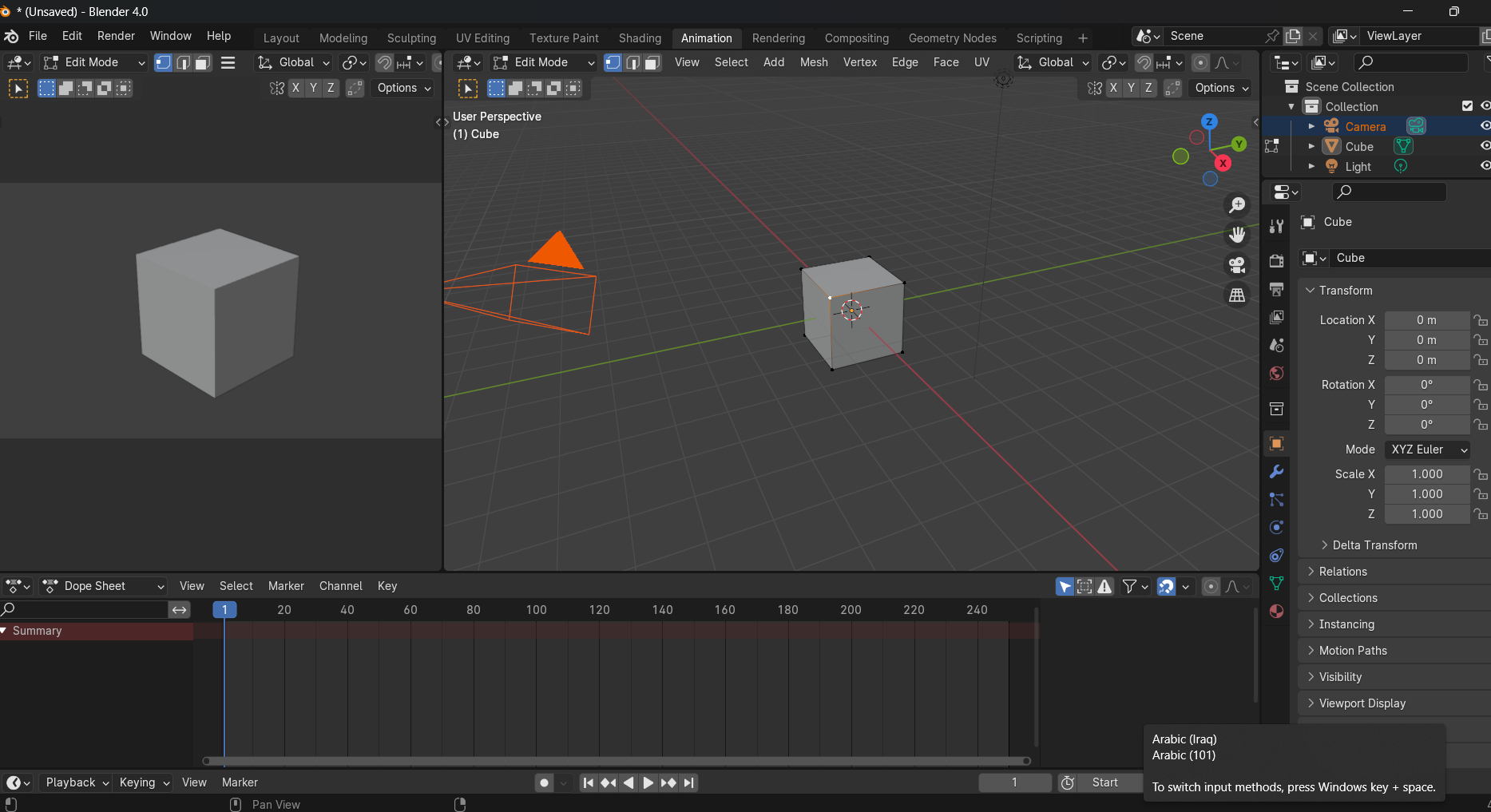
Blender 4.0's interface is designed to be flexible and fully customizable. It consists of several key areas:
- 3D Viewport: The main area for viewing and editing the 3D scene
- Outliner: Scene tree view — all objects and collections
- Properties: Properties panel — edit object, material, and light settings
- Timeline: Time strip for animation and keyframe creation
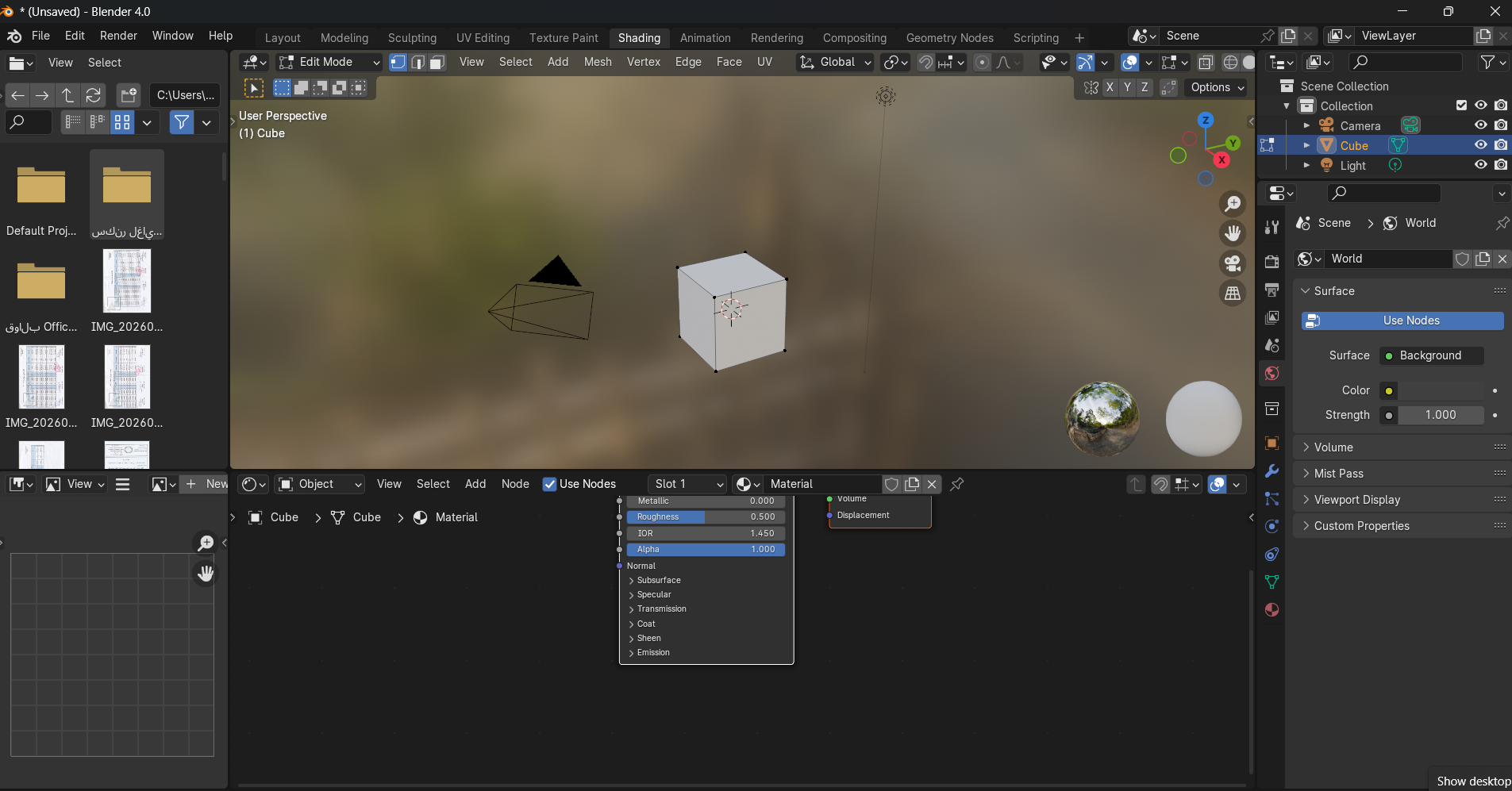
- Shader Editor: Node-based material editor for creating and editing materials
- Topbar: Menu bar and workspace tabs (Layout, Modeling, Shading...)
📚 Tutorial Sections
1️⃣ Modeling
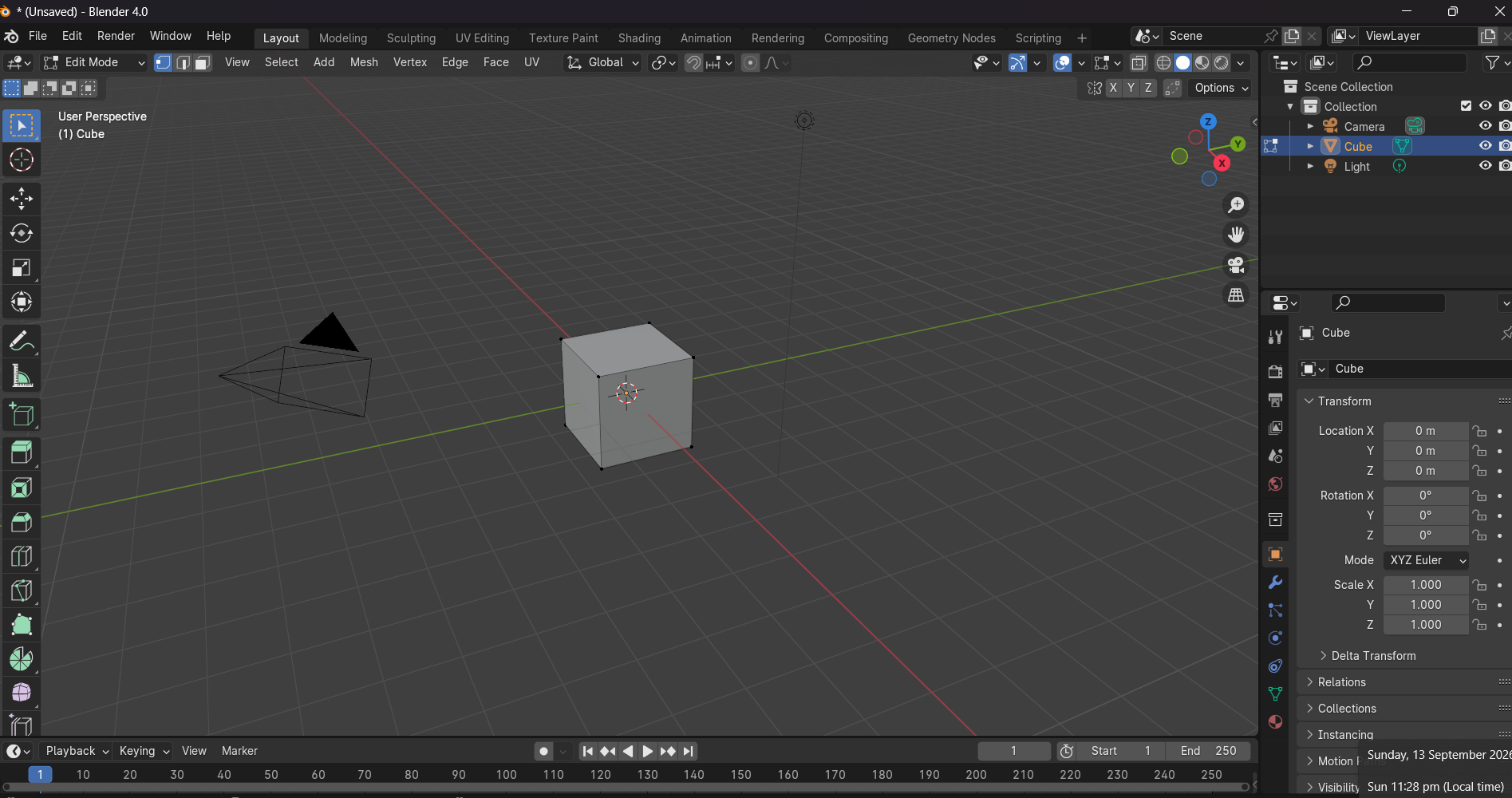
Learn the fundamentals of creating 3D objects from scratch. Covers vertex, edge, and face editing; using modifiers like Subdivision Surface, Mirror, and Boolean; and digital sculpting for organic details.
2️⃣ Shading & Lighting
How to create realistic materials using the node system (Principled BSDF), add proper lighting to your scene with environment settings (HDRIs), and configure camera settings for the best results.
3️⃣ Animation
Keyframe animation basics, character rigging with armatures, and applying realistic motion with animation curves (F-Curves) and the Non-Linear Animation (NLA) Editor.
4️⃣ Simulation
Simulate fluids, smoke, fire, hair, and cloth using MantaFlow, Cloth, and Particle System for realistic physics-based effects.
5️⃣ Rendering
The difference between Cycles and EEVEE Next engines and when to use each. Configure quality and speed settings, and perform final project rendering.
6️⃣ Compositing & Video Editing
Use the node-based compositor to add visual effects and color grading, and the video editor to cut and arrange clips with transitions and audio effects.
⬇️ Download
⚠️ Disclaimer: The link below leads to the official website. We do not host any files.
🌐 Go to Official Website📋 System Requirements
- Minimum: 64-bit quad-core CPU, 8 GB RAM, GPU with OpenGL 4.3 support
- Recommended: 64-bit octa-core CPU or better, 16-32 GB RAM
- GPU: NVIDIA RTX or AMD Radeon with CUDA/OptiX or HIP support for faster rendering
- 500 MB storage for the app + additional space for projects
- Windows 10/11 64-bit, macOS 12+ (Intel or Apple Silicon), Linux
- Three-button mouse (recommended) or mouse with extra buttons
💡 Tips for Beginners
- Start by learning basic shortcuts — Blender relies heavily on keyboard shortcuts
- Use the built-in workspaces (Layout for design, Shading for materials...)
- Watch community tutorials on YouTube — there's excellent free content
- Progress gradually: modeling → materials → lighting → animation → rendering
- Save your project frequently — Blender can crash occasionally
- Try free add-ons from the Blender Market repository
❓ Frequently Asked Questions
Is Blender really free?
Yes, Blender is completely free and open source under the GPL license. There is no paid version or subscriptions. You can use it commercially without any restrictions.
Can I use Blender for professional work?
Absolutely! Many world-class studios use Blender in film production, commercials, and games. The Oscar-winning 2025 film "Flow" was made entirely in Blender.
What's the difference between Cycles and EEVEE Next?
Cycles uses path tracing (Ray Tracing) for photorealistic, accurate results but is slower. EEVEE Next is much faster and works in real-time, ideal for previews and projects that don't require absolute precision.
Do I need a powerful GPU to run Blender?
Blender runs on most modern hardware, but a modern GPU (NVIDIA RTX or AMD Radeon) significantly speeds up rendering. For basic learning, any GPU with OpenGL 4.3 is sufficient.
How can I learn Blender quickly?
Start with the official beginner tutorials on blender.org, then move on to small projects. Daily practice is more important than theory. Set goals: model a cup, a chair, a room, then a simple character.